
Originally Posted On: https://www.safetypluswholesale.com/blogs/news/the-5-best-places-to-install-an-automatic-fire-extinguisher-system-in-commercial-kitchens
Quick Picks
Short on time? Here's every spot in the roundup, with what it's best for.
-
1. Under the exhaust hood: Best for fryers, griddles, charbroilers
-
2. Inside the exhaust duct: Best for hidden grease paths
-
3. Electrical room and panels: Best for switchgear and heavy loads
-
4. Dry storage and prep areas: Best for unattended low-risk rooms
-
5. Gas and appliance connection points: Best for shutoff and remote activation
Our top pick: a listed wet chemical system over the cooking line, backed by portable Class K extinguishers from Safety Plus Wholesale.
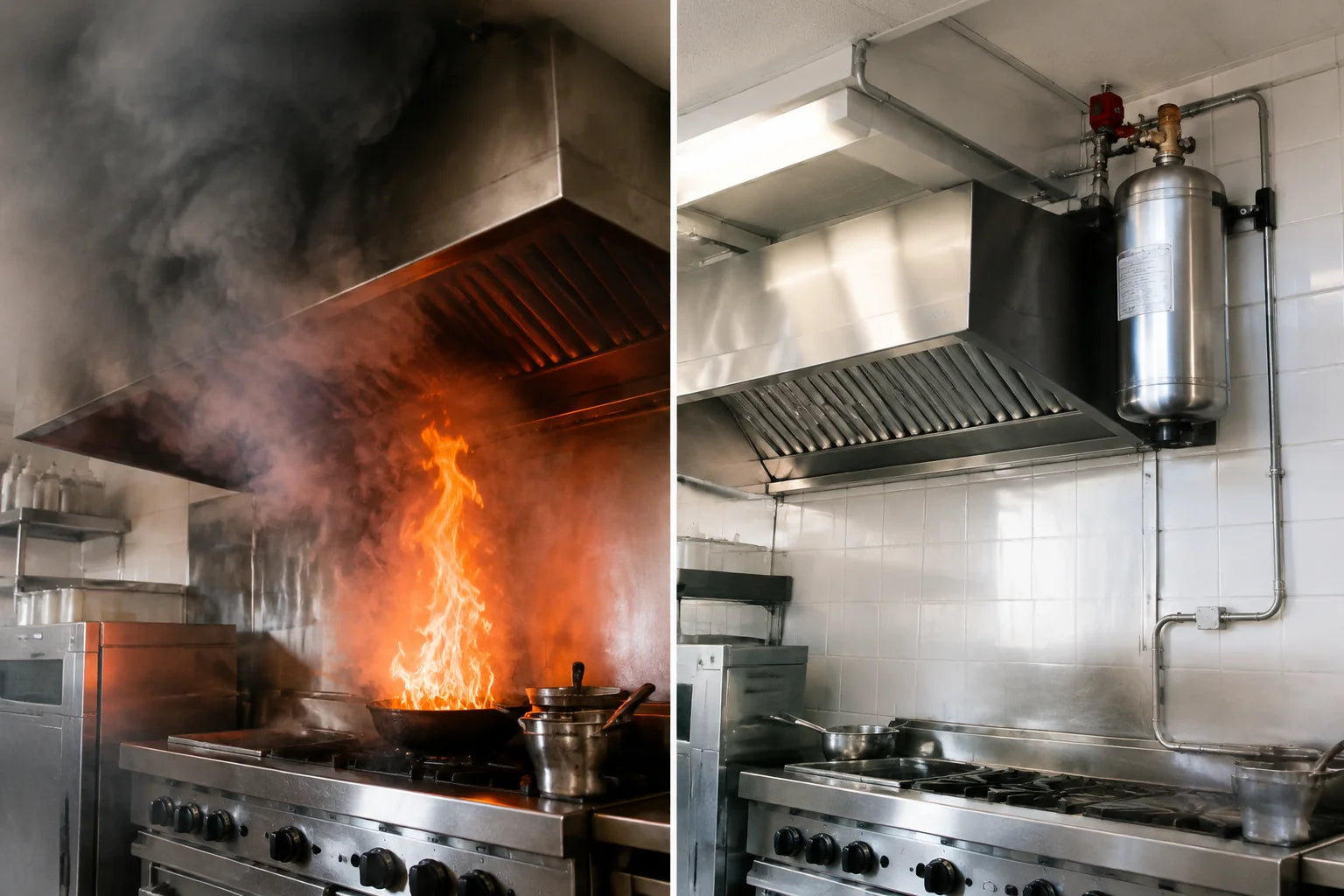
Most commercial kitchen fires don't start in the dining room. They start under the hood, in a fryer or a charbroiler, where grease and open heat sit inches apart. That's why every inspector walks to the cooking line first.
An automatic fire extinguisher system is what stands between a flare-up and a total loss. It detects heat, releases a wet chemical agent, and shuts off fuel without anyone touching a thing. Sounds simple. Yet it's also where plenty of fit-outs go wrong, because the nozzles are aimed at the wrong appliance, or the system was sized for last year's equipment layout.
Placement matters as much as the hardware. A listed system in the wrong spot won't pass inspection, and a good one in the right spot can save a tenant space and a project schedule. Here's the thing: a kitchen has more than one place that needs coverage, and they don't all call for the same tool.
How We Picked These 5 Spots: Selection Criteria for Commercial Kitchen Fire Suppression
A fryer flare-up at 2 a.m. in a closed restaurant doesn't wait for a cook to grab a hose. That's the scenario behind every pick on this list. We ranked each spot by how fast a grease fire can start, how hard it is to reach, and whether an automatic fire extinguisher system can cover it without blocking work.
What NFPA 96, NFPA 17A and UL 300 Require for Kitchen Installation
Three documents drive most inspections. NFPA 96 covers hood, duct, and cooking-operation safety. NFPA 17A governs wet chemical suppression systems. UL 300 is the fire test for those systems on modern high-efficiency fryers. Nozzles must sit where the listed manual says. Fuel and power shutoffs must trip on discharge. Semiannual maintenance is mandatory.
Why Fire Class Matters: Grease (Class K) vs. Electrical vs. General Combustibles
Grease fires need Class K wet chemical because it cools oil and forms a soapy seal. Electrical spots, like a panel room, need a non-conductive agent. General combustibles such as cardboard storage respond to ABC dry chemical. Wrong agent, wrong result. For secondary zones, commercial fire extinguishers with heat-actuated release give hands-free coverage.
1. Under the Exhaust Hood Over the Cooking Line: Automatic Fire Suppression System for Restaurant Use
The hood is where kitchen fires start. Grease builds up in the plenum and ducts, and one flare-up from a fryer can climb straight into it. An automatic fire extinguisher system mounted here stops the fire before a crew even reaches for a hand-held unit.
What the System Does: Nozzles, Fusible Links, Thermal Bulb Temperature Ratings and Wet Chemical Agent
Nozzles aim at each appliance, the plenum, and the duct. Fusible links or thermal bulbs sit in the hood and melt or burst at a set temperature, commonly 360°F to 500°F. That releases a wet chemical agent, which cools the oil and forms a soapy layer over it. Installation must follow NFPA 96 and UL 300, and the system needs a service tag every six months.
Best Use Case: Fryers, Griddles, Ranges and Charbroilers
Fryers are the worst offenders, since oil can reach auto-ignition near 700°F. Cover these too:
-
Griddles and ranges
-
Charbroilers and woks
Small prep areas without a full hood can use an automatic heat activated fire extinguisher as a backup. Many contractors also stock a fire extinguisher for restaurant fit-outs where a hood system isn't required.
Inside the Exhaust Duct and Plenum: Protecting the Hidden Grease Path
Where does a grease fire actually travel? Straight up the duct, out of sight. That's why an automatic fire extinguisher system needs a dedicated nozzle inside the exhaust path, not just over the cooking line.
How Duct Nozzles, Tubing and Cage Clamps Get Installed
Installers typically work in this order:
-
Mount the duct nozzle at the plenum opening or duct entry, per the manufacturer's listed spacing.
-
Run stainless tubing from the agent tank, keeping bends gentle and runs short.
-
Secure the line with cage clamps so it can't sag or vibrate loose.
-
Fit thermal bulb detectors rated for the duct's heat, then test the release.
Skip the clamps and the tubing shifts. Inspectors catch that fast. Under NFPA 96 and UL 300, the nozzle must stay clear of grease buildup, so plan on semiannual maintenance and a current tag.
Best Use Case: Long Duct Runs and Tenant Fit-Outs Where Access Is Limited
Long runs are the obvious fit. So are tenant fit-outs, where the ceiling closes up fast and retrofitting later is painful. Get the duct protection in before drywall. Pair it with a restaurant kitchen fire extinguisher near the line, and browse any fire extinguisher for sale category to complete your backup units.
The Electrical Room and Panel Area: Automatic Fire Extinguisher for Electrical Room Protection
Electrical faults start roughly 1 in 5 commercial kitchen fires, according to NFPA data. That's a big number for a room most crews forget about after the walk-through.
An automatic fire extinguisher for electrical room use needs to knock down a live-equipment fire without wrecking the gear. Water is out. Plain and simple.
Clean Agent and CO2 Options vs. Water-Based Suppression
Clean agent and CO2 systems leave no residue and don't conduct electricity, so switchgear survives the discharge. Water-based suppression can short panels and turn a small fault into a full shutdown. A heat-actuated dry chemical unit, like a fire extinguisher for warehouse style 10lb ABC model, works for small panel closets. But it leaves powder behind, so expect cleanup.
Best Use Case: Kitchens With Heavy Equipment Loads and Dedicated Switchgear
Kitchens running fryers, walk-ins, and exhaust fans on a dedicated switchgear room carry the highest risk. Here's what to specify:
-
CO2 or clean agent for the switchgear room itself
-
Heat-actuated units in tight panel closets
-
A visible fire extinguisher cabinet outside the door for portable backup
Check the expiration date and recharge schedule at every maintenance visit.
Dry Storage, Prep Areas and Walk-In Coolers: Where Automatic Extinguisher Balls and Small Units Fit
An extinguisher ball isn't a kitchen fire system. Anyone who says otherwise hasn't read the listings. Still, in unattended rooms like dry storage — walk-in coolers, a small passive unit earns its spot.
How a Fire Extinguisher Ball Works, Its Chemicals and Its Expiry Date
The ball is a shell filled with dry chemicals, usually ABC powder. Flames melt the shell, usually at around 175°F, and the powder releases and smothers the fire. No wiring, no gauge. Most carry a expiry date of about 5 years, so tag it and track it like any other extinguisher.
Best Use Case: Unattended Spaces, With Honest Limits Compared to Listed Systems
Think closets, electrical rooms, and shelving bays where nobody's watching overnight. But the limits are real. Balls cover a small footprint, aren't rechargeable, and don't replace a listed suppression system over cooking lines. For larger storage rooms, a heat-actuated unit like this fire extinguisher for commercial building covers far more floor space and stays serviceable.
-
Good for: small, closed, low-traffic rooms
-
Not for: grease fires (that's a wet chemical job, not a purple K fire extinguisher or ABC powder job)
5. Fuel and Appliance Connection Points: Gas Shutoff, Manual Pull Station and Remote Activation
Tying the Suppression System to Gas and Power Shutoff
A line cook at a busy restaurant hits the pull station after a grease fire flares up. The agent discharges. But the gas valve stays open, and the fryer keeps feeding the flames. That's a failed install, plain and simple.
NFPA 96 and NFPA 17A require fuel and electric to the cooking equipment to shut off when the automatic fire extinguisher system activates. The shutoff has to be tied to the system, not left to a worker's memory. Check three things before sign-off:
-
The gas valve trips on discharge, and it needs a manual reset.
-
Shunt-trip breakers cut power to electric appliances.
-
Every fuel line under the hood is covered.
Best Use Case: Exit Paths and Pull Station Placement
Put the manual pull station along the path out of the kitchen, about 10 to 20 feet from the hood. Cooks shouldn't reach across a flaming fryer to use it. Mount it at a height your inspector accepts. Then mark it clearly.
Backup coverage matters in adjacent spaces too. For a front office or dry storage, a fire extinguisher for office building use can work alongside the hood system. Test the remote activation at every semiannual maintenance visit.
How to Choose: Our Top Pick for Your Project and What to Order
Our Top Pick: A Listed Wet Chemical System Over the Cooking Line, Backed by Portable Class K Extinguishers From Safety Plus Wholesale
Pick the listed wet chemical system. Nothing else covers fryers, griddles, and hoods the way NFPA 96 and UL 300 expect. Pair it with portable Class K units from Safety Plus Wholesale, which meet NFPA and UL standards across its catalog. That combination is the top pick for any kitchen project, and it's the one inspectors pass fastest.
For the back-of-house electrical room or storage, a heat-actuated unit works well. Check whether a fire extinguisher required for business rules applies to those spaces before you finalize the order.
Specifying Checklist: Installation, Inspection Tags, Recharge, Maintenance and Bulk Ordering for Contractors
-
Installation: Have a certified technician set nozzles, fusible links, and the manual pull station.
-
Inspection tags: Order certification tags up front so turnover isn't held up.
-
Recharge: Schedule it after any discharge, and at the set service interval.
-
Maintenance: Log semiannual checks and the expiration date on every unit.
-
Bulk ordering: Use the Wholesale Quote Builder; orders ship in 2–3 days, always tracked.
Questions on specs? Call 1-855-747-2334 and talk to a real person.
Five spots, one clear priority. Fire in a commercial kitchen starts with grease, and grease lives over the cooking line and inside the duct. That's where a listed wet chemical automatic fire extinguisher system earns its place, and where inspectors look first.
The other locations matter, but they play supporting roles. Electrical rooms need agents that won't turn a short circuit into a bigger problem. Dry storage and walk-ins can take small units, though those never replace a listed system. And the gas and power shutoff tie-in? Skip it, and the best nozzle layout in the building still leaves fuel feeding the flames.
For general contractors and project managers, the smart move is to settle the specification early. Tenant fit-outs punish late changes, especially when ductwork is already closed up.
Next step: pull the hood and duct drawings for the current project, mark each of the five zones, and send the portable Class K extinguisher, bracket, and cabinet counts to Safety Plus Wholesale through the Wholesale Quote Builder, or call 1-855-747-2334 to talk through the order with a real person. Get the paperwork right before the walls go up.
Safety Plus Wholesale
119 Hausman St 2nd floor
Brooklyn, NY 11222
(855) 747-2334
https://www.safetypluswholesale.com


