
Key Takeaways
- A Wilmington project involved removing a 350-pound cast iron oil boiler from a tight basement mechanical room and connecting a new gas boiler to century-old piping
- Delaware homeowners should confirm natural gas is actually available at their address before applying for service, since not every neighborhood sits inside a utility’s distribution area
- Delmarva Power’s conversion process runs from a site visit through contractor estimates, permitted gas-line installation, inspected inside piping, and meter installation, and the gas-line step alone can take up to six weeks
- Old boiler insulation, rope gaskets, or cement around sections may contain asbestos and should be assessed before any cutting or sanding begins
- Enhanced Heating and Air Conditioning handles oil-to-gas boiler conversions for homeowners in Newark and surrounding Delaware communities
An aging oil-fired boiler rarely fails on a convenient schedule, and that reality is pushing more Delaware homeowners to ask whether switching to natural gas makes sense for their home. A recent project in Wilmington shows just how involved that switch can be once the old equipment is more than a century removed from the home’s original piping.
Removing a 350-Pound Boiler in Wilmington
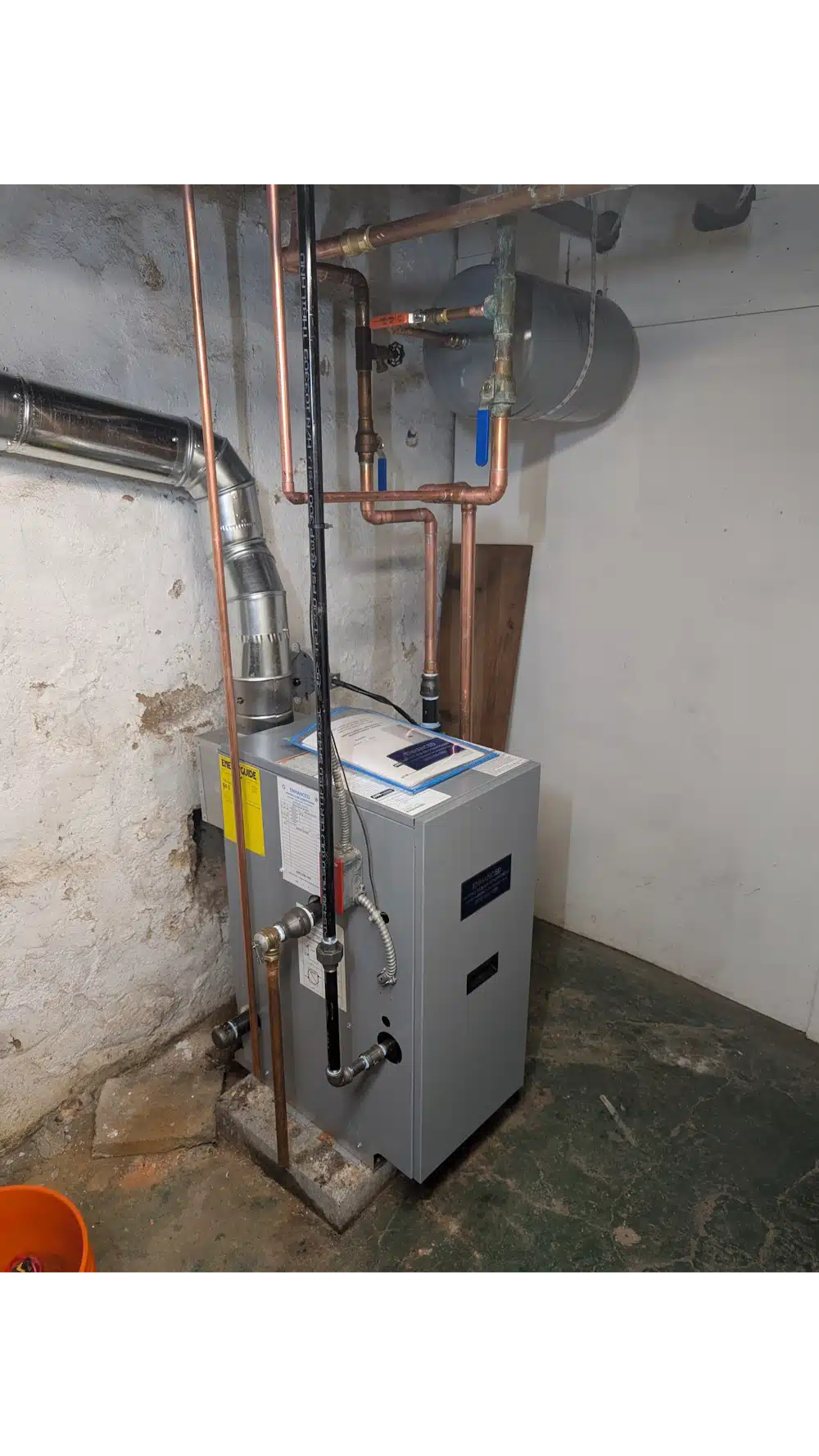
In an older Wilmington neighborhood, a homeowner’s oil-fired cast iron boiler had reached the point where replacement made more sense than continued repairs. The equipment weighed 350 pounds and sat in a tight basement mechanical room, so the removal itself required careful planning before any new installation work could begin.
The project also meant working with piping that was more than 100 years old, adapting it to connect safely with a modern gas boiler rather than ripping out the home’s original hydronic heating system. A detailed account of how that project came together, including before-and-after photos of the finished mechanical room, is available in Enhanced Heating and Air Conditioning’s writeup of the oil-to-gas boiler conversion in Wilmington.
A project like this shows that an oil-to-gas conversion involves far more than unbolting one appliance and bolting in another. Before any boiler comes out of a basement, several pieces need to line up first: confirming gas is actually available, coordinating with the utility, pulling the right permits, and sequencing the work so the home never goes without heat longer than necessary.
Step One: Confirm Gas Is Available
Before getting attached to the idea of a new gas boiler, a homeowner needs to answer one basic question: does natural gas service even reach the property? Delaware’s natural gas distribution is not statewide. Delmarva Power and Chesapeake Utilities serve as the state’s two natural gas utility providers, and Delmarva Power’s gas distribution covers only portions of New Castle County, not the entire county or state.
Checking Availability With Your Utility
Delmarva Power directs homeowners interested in switching from oil or electric heat to natural gas to its My Switch to Gas team, which checks whether gas lines run near a given address. This step matters because a home a few streets away from an existing gas main may face a very different cost and timeline than one already sitting next to one. Skipping this check is a common misstep, since contractors cannot install gas equipment that has no fuel supply to connect to.
Applying for Service and Meter Installation
Once availability is confirmed, the homeowner can submit a service application and then bring in a licensed contractor to handle the work inside the home. There is a related wrinkle worth knowing about: if gas service already exists at the property but no meter has ever been installed, the homeowner is responsible for arranging that meter installation separately. This is an easy detail to overlook when a home has gas piping left over from a previous owner or a partial installation.
Delmarva Power’s Conversion Checklist
Conversions follow a defined sequence rather than a single appointment, and understanding that sequence helps homeowners set realistic expectations for when their new boiler will actually fire up.
From Site Visit to Inspected Piping
Delmarva Power’s checklist for converting lays out the process in stages: a gas-availability check and application, a utility site visit, a contractor estimate paired with the necessary permit, installation of the gas service line itself, inspection of the piping inside the home, and finally meter installation. Each stage depends on the one before it, so rushing ahead on interior work before the utility has completed its portion rarely saves time in practice.
Why the Gas Line Can Take Up to Six Weeks
Delmarva Power’s own checklist states that installing a new gas service line can take up to six weeks measured from the utility’s field visit. That timeline is worth factoring into any decision about when to start a conversion, especially for a homeowner hoping to have a new system running before the coldest part of winter. Planning a conversion in late summer or early fall, rather than waiting until the first cold snap, leaves enough buffer for this stage to run its course.
Safely Removing the Old Oil Boiler
Once gas service is in place, attention turns to what has to come out of the basement, and that part of the job carries its own set of challenges separate from anything the utility handles.
Accessing Tight Basements and Narrow Stairs
A boiler reached only by a narrow stairway or a cramped mechanical room often cannot be carried out in one piece. Cast iron boilers are frequently broken down into their individual sections to get them out of a basement when weight or stair access makes moving the whole unit impractical. A 350-pound unit in a tight space, like the one removed during the Wilmington project, is a realistic example of exactly this kind of challenge.
Disconnecting Fuel, Power, Water, and Vent Lines
A boiler connects to more than just a chimney. Fuel supply, electrical power, water lines, and venting all tie into the unit, and safe removal means shutting off and isolating each of these connections and draining the heating system before any disassembly begins. Protecting the carry-out route through the home is part of this same preparation step, since a 350-pound piece of cast iron moving through narrow hallways can do real damage to floors and walls if the path isn’t planned ahead of time.
Checking Old Insulation for Asbestos
Older boilers sometimes carry asbestos in their insulation, rope gaskets, pipe wrap, or the cement used around sections. Suspicious material should never be broken, cut, or sanded before it has been properly assessed. If asbestos is confirmed, a licensed abatement contractor needs to remove it before any boiler demolition work continues. This step should never be skipped or rushed, since disturbing asbestos-containing material creates a health hazard that outlasts the heating project itself.
Working Around Century-Old Piping
Homes old enough to still have their original oil boiler often have piping systems that are just as old, and that piping was never designed with a modern gas boiler in mind. Adapting a new unit to connect with existing hydronic distribution, rather than tearing out and replacing piping that still works perfectly well, calls for a contractor who understands both the new equipment and the quirks of older plumbing layouts.
This balancing act played out directly in the Wilmington project, where the century-old piping had to be preserved and integrated with the new gas boiler rather than replaced wholesale. Getting this part wrong risks leaks, pressure problems, or uneven heating throughout the home, so the fitting work deserves the same care as the boiler removal itself.
Installing and Testing the New Gas Boiler
With the old equipment gone and the piping ready, the new high-efficiency gas boiler gets installed and connected to the home’s existing hydronic heating system. This includes new venting, gas piping, and safety controls sized to the specific unit being installed.
Before anyone calls the job finished, the system needs thorough testing and a safety inspection to confirm reliable performance. Skipping or shortcutting this step risks problems showing up later during the first real cold snap of the season, which is the worst possible time to identify an issue.
Weighing the Long-Term Payoff
A conversion is a meaningful investment, so it helps to think through what changes on the other side of the project. Potential savings and operating costs depend on several factors working together:
- Home size and insulation levels
- Current oil usage patterns
- Equipment efficiency of the new gas boiler
- Local utility rates
- Thermostat settings and daily usage habits
Natural gas also eliminates oil deliveries and the need for on-site fuel storage tanks altogether, which removes one more thing to schedule and monitor through the winter. Many homeowners find that gas equipment comes with reduced maintenance requirements compared to an aging oil system, along with more consistent comfort throughout the home.
A Coordinated Project, Not a Swap
An oil-to-gas boiler conversion touches far more than the appliance sitting in the basement. Confirming gas availability, working through the utility’s application and service-line process, safely removing old equipment, checking for hazards like asbestos, and integrating new equipment with existing piping all have to come together in the right order for the project to go smoothly.
For a Delaware homeowner weighing this decision, working with a contractor experienced in both modern gas equipment and older hydronic systems can make the difference between a smooth transition and a drawn-out headache. Anyone ready to start mapping out what a boiler conversion from oil to gas might look like for their own home can begin by checking gas availability at their address and working from there.
Enhanced Heating and Air Conditioning 68B Albe Drive Newark, DE 19702 (302) 836-1921
Enhanced Heating and Air Conditioning
+1 302 836 1921
68B Albe Drive
Newark
DE
19702
United States


