
Key Takeaways
- A ceiling stain can be sealed and repainted only if the drywall is dry, firm, and no longer growing or changing
- Sagging, soft, mildewed, or damp drywall means the board needs to be cut out and replaced, not just patched over
- Checking whether a stain changes after rain versus after the air conditioner runs can help point to the real source before repair work starts
- Exterior trim and fascia painting involves its own preparation steps, separate from interior drywall and ceiling repair
- Florida Painting Company provides free written estimates for drywall, ceiling, and exterior trim work across Miami-Dade County
The rainy season leaves more than wet lawns behind in Miami-Dade. For a lot of homeowners, the clearest sign of what passed through is a new brown ring on the ceiling that was not there back in May. Before reaching for a paint roller, it helps to know whether that mark is an old scar or a sign that water is still finding its way in.
Is That Ceiling Stain a Real Problem?
A ceiling stain by itself does not automatically mean trouble. Plenty of stains in Miami-Dade homes are leftovers from a single event: a roof leak that got fixed months ago, a window that was recaulked, or a one-time overflow from an air handler drain pan. Once the moisture dried out, the stain just sat there as a cosmetic mark, a ring of minerals and tannins left behind after water moved through the gypsum board.
The tricky part is that a stain cannot always be judged on looks alone. A dry, intact ceiling stain with no sagging can usually be sealed with a stain-blocking primer and repainted. But a stain that looks similar from across the room can actually be sitting above a slow, ongoing leak that has not fully shown itself yet. That is why the next step matters so much: figuring out whether the source behind the stain is truly finished or still active.
Signs the Leak Is Still Active
A few simple checks can separate an old, settled stain from one that is still being fed by water. The surface itself, the way it changes over time, and the timing of when it appears all offer clues worth paying attention to.
Damp, Growing, or Sagging Spots Mean Trouble
A stain that grows, darkens, feels damp, or turns soft under a light touch is behaving very differently from a dry, firm stain with a stable edge. Taking a dated photo of the stain from the same angle every so often, and comparing it after a heavy rain or a long run of the air conditioner, can reveal whether the mark is actually spreading or holding steady. A damp surface is a useful clue, but a dry painted surface does not rule out moisture sitting behind the drywall or soaking into the insulation above it, so it pays to keep checking even when the paint feels dry to the touch.
Rain Versus AC: What the Timing Reveals
Timing often tells more than appearance. A stain that shows up or worsens after a hard rain points toward a roof or window entry point, while one that appears after the air conditioner has been running tends to be tied to condensate, often from a clogged drain line or a rusted-out pan. A stain under a bathroom that darkens after a shower suggests plumbing rather than weather. None of this requires special tools, just attention to when the mark changes and what happened right before.
When to Clear the Room Instead of Checking It
Some signs call for stepping back rather than leaning in. A ceiling that is bulging or visibly sagging should be treated as a safety concern, not a puzzle to poke at. Pressing on it or probing it from below can cause a collapse that was otherwise still being held back by the sagging board. Water pooling at or near a ceiling light fixture, a fan, or a smoke alarm is another reason to clear the area and avoid touching anything electrical unless it can be done without stepping into standing water. A recurring stain, one that keeps showing up even after it seemed to dry out, should be treated as a sign of an unresolved or intermittent leak rather than proof that the problem is over.
Fixing the Source Before the Ceiling
Once there is reason to believe the leak is still active, the order of operations matters. The leak has to be tracked down and repaired by the right trade first, whether that is a roofer, a plumber, or an HVAC technician working on a condensate line. Painting over a stain while water is still getting in just hides the problem for a little while longer, and it tends to come back worse.
Why Drying Out Comes Before Patching
Even after the source gets fixed, the drywall itself needs time to dry out fully before any cosmetic work begins. Patching or repainting over wet board traps moisture behind the new surface, which can lead to repeat staining, mildew growth, and joints that fail again down the road. The owner of Florida Painting Company puts it plainly: the stain on the ceiling is the last thing fixed, not the first, and if the board is still wet, that gets flagged rather than patched over anyway.
Matching the Repair to the Damage
Once the leak is resolved and the board has dried, the right fix depends heavily on how much damage is actually there. Not every stain calls for the same level of repair, and choosing the wrong approach either wastes money or leaves a weak spot behind.
Dry, Stable Stains: Seal and Repaint
For a stain that has stayed dry, firm, and unchanged, the fix is fairly straightforward. The area gets sealed with a stain-blocking primer, since an ordinary latex primer often lets old water stains bleed right back through the new paint. Once that is sealed, the ceiling gets repainted, usually out to a natural break line so the new paint does not sit as an obvious patch against an older, slightly duller surrounding surface.
Soft or Sagging Drywall: Cut Out and Replace
When the board is soft, sagging, mildewed, or crumbling, surface repair will not hold. That kind of damage calls for cutting out the affected board and replacing it rather than patching over it. A proper replacement repair involves several steps worth knowing about:
- Cutting back to sound, dry board, usually to the centers of the nearest framing members
- Securing new drywall of matching thickness to the framing
- Taping the joints and applying joint compound in multiple coats, sanding between each
- Matching the existing texture before the area is primed and painted
This kind of repair naturally takes longer than a simple stain-block job, since joint compound needs time to dry between coats, and that drying time stretches out in humid conditions.
Blending the Patch Into Textured Ceilings
Many Miami-Dade ceilings carry some kind of sprayed texture, whether that is a splattered knockdown finish, a fine orange peel, or an older popcorn texture. Matching a textured ceiling requires reproducing the existing pattern and blending the new patch into the surrounding texture so it does not stand out under daylight or a lamp at a low angle. A patch that is only smoothed flat, without the texture redone, tends to be the first thing a homeowner notices once the paint has dried.
After the Ceiling: Checking the Eaves
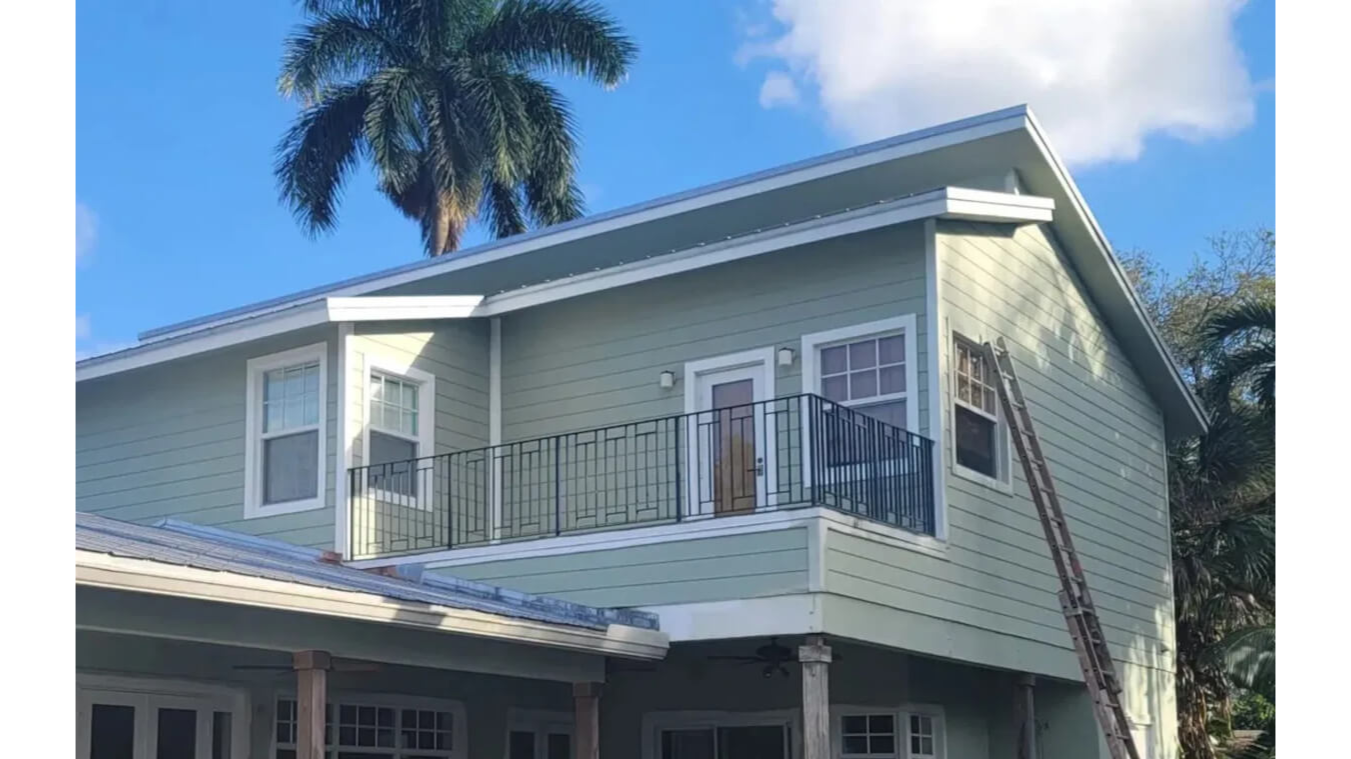
With the inside handled, it is worth glancing outside too, since the same rainy season that stains a ceiling tends to take a toll on exterior trim at the same time. Exterior trim and fascia painting is its own job, separate from drywall work, and it covers fascia, soffits, casings, shutters, columns, or gable trim when the stucco body of the house is still in good shape.
Details on the trim and fascia service: https://floridapaintingmiami.com/exterior-trim-painting-miami/.
Why Trim and Fascia Fail Before Stucco Does
Stucco can hold up for years while the fascia along the roofline starts failing much sooner. Wood trim and fascia take direct sun, wind-driven rain, and constant expansion and contraction in a way that stucco simply does not experience the same way. The west- and south-facing sides of a house tend to show wear first, since those elevations take the hardest afternoon sun, leading to chalking, peeling paint at joints, and split caulk at casings.
Prepping Sound Wood for a Lasting Coat
Getting a trim repaint to actually last starts with proper preparation, not a fresh coat of paint alone. That preparation typically includes:
- Washing the trim and letting it dry fully, since painting over damp wood is one of the most common reasons a Miami trim job fails within a year
- Scraping and sanding failed paint back to a sound edge
- Probing wood at corners and joints for rot
- Priming any bare surfaces before caulking or topcoats go on
- Recaulking open joints with a flexible, paintable caulk
- Applying two finish coats once everything underneath is sound and dry
Soft wood found during that inspection gets flagged for replacement rather than painted over, since a coating cannot restore strength to wood that has already rotted.
Pre-1978 Trim and Pre-1985 Popcorn Ceilings: What Changes
Home age changes how some of this work gets approached. Trim on a house built before 1978 may carry lead-based paint, and federal rules affect how that paint can be scraped, contained, and cleaned up once a meaningful amount of painted surface is disturbed. On the ceiling side, popcorn texture applied before the mid-1980s may contain asbestos, and disturbing it by scraping or sanding can release fibers into the air. A water-stained popcorn ceiling in an older home should be tested before any repair work begins, since the test result shapes what repair approach is even safe to use.
A Dry Board Is the Only Lasting Fix
No amount of primer or fresh paint makes up for drywall that is still wet behind the surface. The pattern worth remembering is simple: confirm the leak is actually gone, let the board dry out completely, and only then choose between sealing a stable stain or cutting out and replacing damaged material. Skipping that order tends to mean doing the same repair twice.
For homeowners weighing a ceiling repair against a possible trim repaint this season, a written estimate from Florida Painting Company can help clarify which approach actually fits the damage before any work begins. Call (786) 724-4880.
Florida Painting Company
+1-786-724-4880
555 NE 15TH STREET PHG (34G)
Miami
FL
33132
United States