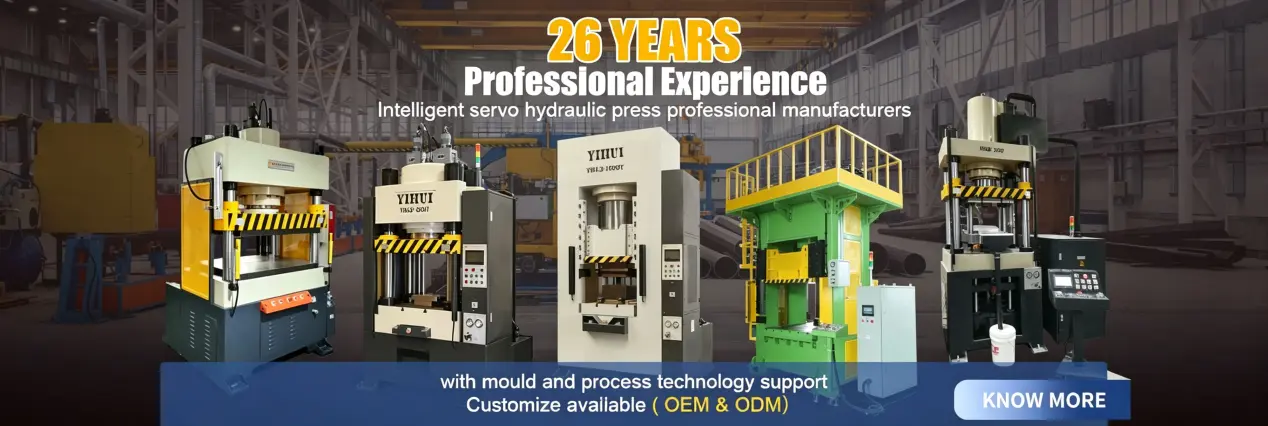
DONGGUAN, GUANGDONG, CHINA, October 16, 2026 /EINPresswire.com/ — Global manufacturing standards demand higher precision, repeatability, and material yield in metal forming operations. Whether producing complex automotive components, aerospace brackets, or high-end hardware, industrial buyers increasingly look to international supply chains for advanced production equipment. Finding a reliable China Hydraulic cold forging press Machine Manufacturer involves navigating a vast landscape of engineering capabilities, quality management protocols, and technical support systems. Selecting a manufacturing partner requires a structured approach to evaluate technical competency, structural integrity, and long-term operational reliability.
1. Evaluating Technical Expertise and Customization Capabilities
The foundation of any high-precision forging operation lies in the engineering design and structural rigidity of the press itself. Modern cold forging applications require precise pressure control, consistent stroke positioning, and minimal thermal or mechanical deflection under high tonnage loads. When assessing a manufacturing partner, engineers must examine the depth of technical experience in designing specific machine configurations, such as cold forging presses, hot forging presses, and specialized powder compacting systems.
A capable manufacturer must demonstrate proficiency not just in standard machine building, but in tailoring press kinematics to specific part geometries. For instance, multi-cylinder synchronization, programmable stroke profiles, and advanced hydraulic circuit layouts are critical for preventing material cracking and ensuring uniform density in forged components. Reviewing technical documentation, hydraulic schematic designs, and custom engineering case studies provides valuable insight into whether a supplier can translate complex component blueprints into stable, repeatable shop-floor production. Furthermore, integration with automated feeder systems and robotic transfer lines separates basic machinery assemblers from comprehensive technical engineering providers.
2. Verifying International Quality Management and Certification Standards
Consistency in mass production relies heavily on standardized manufacturing processes and rigorous quality assurance protocols. International buyers must look beyond marketing claims and verify official certifications issued by recognized third-party inspection agencies. Adherence to international management frameworks ensures that every stage—from raw steel plate cutting and frame welding to hydraulic manifold assembly and electrical integration—meets strict tolerance benchmarks.
Industrial machinery destined for global markets should comply with established quality benchmarks such as ISO 9001 for quality management systems, alongside CE safety directives required for European deployment. Additionally, inspection verifications from global entities like SGS or Bureau Veritas (BV) offer an extra layer of confidence regarding structural weld integrity, pressure vessel safety, and electrical component compliance. Manufacturers that maintain transparent quality traceability records—including ultrasonic testing reports for forged cylinders and rigorous load-testing logs—significantly reduce the risk of unexpected downtime after factory commissioning.
3. Assessing Industry Applications and Production Provenance
A manufacturer’s practical experience across diverse industrial sectors serves as a direct indicator of their engineering adaptability. Hydraulic press systems are deployed across a wide spectrum of manufacturing verticals, including automotive parts fabrication, hardware stamping, cookware production, electronic component assembly, and advanced powder metallurgy. Each sector imposes unique demands on the equipment; for example, powder compacting requires ultra-precise high-tonnage control, whereas deep drawing applications demand specialized cushion force regulation.
Reviewing a supplier’s historical footprint across global markets reveals their capacity to meet varying regional electrical codes, safety regulations, and operational preferences. Equipment operating successfully across more than forty countries—spanning industrial hubs in North America, Europe, Asia, and beyond—indicates a proven ability to design robust machinery capable of multi-shift, high-intensity manufacturing environments. Examining established deployment records helps procurement teams gauge how well a manufacturer understands the distinct metallurgical behavior of different alloys, ranging from aluminum and copper to specialized structural steels.
4. Analyzing Turnkey Solutions and Process Integration Support
Purchasing standalone hydraulic machinery is rarely sufficient for modern smart factories. The true value of an industrial partner often lies in their capacity to deliver comprehensive turnkey solutions that encompass the entire manufacturing ecosystem. This includes not only the press itself, but also matched precision tooling, custom die design, trial processing optimization, and fully automated production cell integration.
Evaluating a supplier’s capability to provide integrated processing technology ensures a smoother transition from prototype development to full-scale serial production. When a single engineering team coordinates the interaction between the press, the hydraulic control unit, the automated safety light curtains, and the transfer mechanisms, potential interface conflicts on the shop floor are minimized. Technical support should extend to operator training, remote diagnostic capabilities, and prompt availability of critical replacement components, ensuring long-term operational continuity and minimized maintenance overhead.
5. Reviewing Manufacturing Infrastructure and Operational Longevity
A supplier’s physical infrastructure and corporate longevity provide tangible evidence of stability and commitment to the industrial sector. Long-standing enterprises with decades of continuous operation have typically refined their machining tolerances, assembly procedures, and supply chain partnerships through multiple economic cycles. Factory scale matters significantly; modern fabrication facilities require dedicated workshop spaces for heavy structural annealing, large-scale CNC boring and milling of main press frames, and comprehensive hydraulic load testing before shipment.
Visiting a production facility—whether physically or through detailed technical audits—allows engineering teams to inspect heavy-duty floor boring machines, precision grinding equipment, and clean assembly bays. A well-capitalized manufacturing plant with dedicated research and development departments is better positioned to adopt emerging automation trends, energy-efficient servo-electric technologies, and digital monitoring interfaces. Partnering with an established manufacturing entity ensures that long-term warranty commitments, technical upgrades, and spare parts supply chains remain secure throughout the multi-year lifecycle of the equipment.
Navigating the global market for heavy industrial machinery requires a disciplined focus on engineering depth, verified quality standards, and comprehensive lifecycle support. By systematically evaluating technical customization, international compliance certifications, cross-industry deployment records, turnkey integration capabilities, and manufacturing infrastructure, industrial enterprises can secure resilient production assets that elevate their competitive standing in precision metal forming. To explore detailed machine specifications, technical parameters, and tailored engineering solutions for specific industrial applications, visit https://www.yihui-press.com/
DONGGUAN YIHUI HYDRAULIC MACHINERY CO., LTD.
DONGGUAN YIHUI HYDRAULIC MACHINERY CO., LTD.
Legal Disclaimer:
EIN Presswire provides this news content “as is” without warranty of any kind. We do not accept any responsibility or liability
for the accuracy, content, images, videos, licenses, completeness, legality, or reliability of the information contained in this
article. If you have any complaints or copyright issues related to this article, kindly contact the author above.

Media gallery