
Key Takeaways
- CMS permanently allows virtual direct supervision under its 2026 rule, using real-time, two-way audio-video technology instead of requiring a physician to be physically present in the office suite
- Audio-only calls, including live phone conversations, do not meet the new standard; the connection must let the supervising physician see and hear what is happening
- Contrast-enhanced imaging, many incident-to services, and pulmonary and cardiac rehab programs qualify, while services tied to a 010 or 090 global surgery period are excluded
- Compliance can collapse the moment a video connection drops, which raises the question of what documentation and backup plans an imaging center needs to survive a CMS audit
- This shift places connection reliability, not physical presence, at the center of a compliant supervision program
For outpatient imaging centers that administer contrast and bill Medicare Part B, CMS’s 2026 rule has changed how direct supervision can be provided. The permanent policy allows qualified supervising physicians to meet the requirement through real-time, two-way audio-video communication for eligible services, rather than requiring physical presence in the office suite.
Virtual Supervision Is Now Permanent
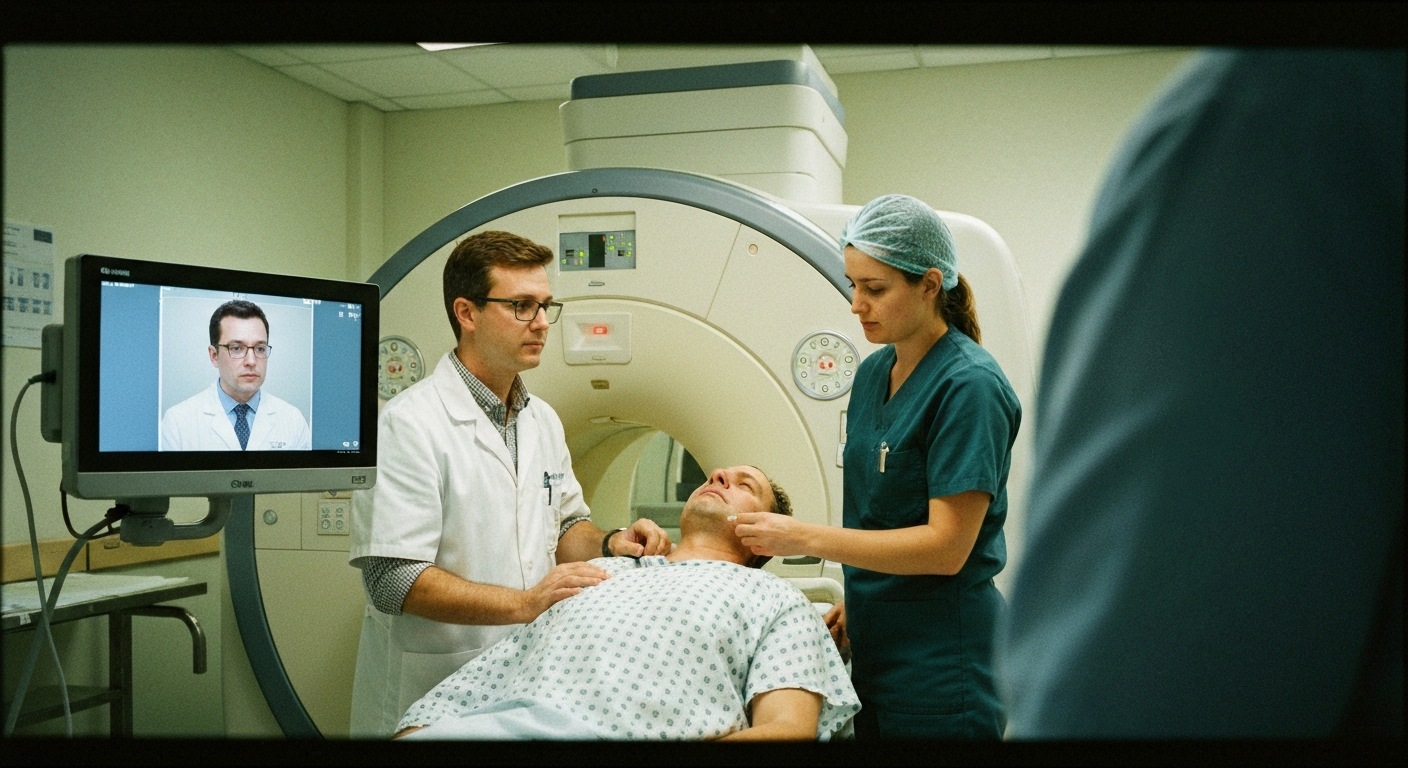
Under the 2026 rule, CMS permits virtual direct supervision through real-time, two-way audio-video telecommunications instead of requiring the supervising physician to be physically present in the office suite. This is not a temporary waiver or a pilot program set to expire; it is a permanent redefinition of what “immediately available” means under Medicare Part B billing rules, written into the Calendar Year 2026 Medicare Physician Fee Schedule.
For imaging-center leaders, this changes the calculus on staffing, scheduling, and physician coverage models that have been in place for years. ContrastConnect, a virtual contrast supervision provider, notes that virtual supervision can help address physician coverage shortages while maintaining required supervision standards. The company’s detailed breakdown outlines the permanent 2026 CMS virtual direct supervision policy, eligible services, connection-failure protocols, contrast-safety requirements, and compliance documentation.
Why the Old Rule Created Bottlenecks
Under the pre-2026 framework, direct supervision meant a physician had to be physically present in the office suite while a supervised service was performed. A phone call was never sufficient, and being in a different part of the same building did not count either. The physician had to be immediately interruptible and physically capable of stepping into the room.
That standard hit smaller practices and rural facilities especially hard. A single-physician practice could not bill incident-to services the moment that physician stepped out for lunch or a meeting. Facilities depending on part-time or rotating radiologists found their billable hours boxed into whatever narrow windows a physician happened to be standing in the building. Contrast-enhanced imaging, which almost always requires direct supervision because of the risk of adverse reactions, suffered the same scheduling friction: high-volume centers without a full-time radiologist onsite often had to cancel or reschedule studies simply because no physician was present at the right moment.
What Counts as Compliant Virtual Presence
The new flexibility comes with firm technical boundaries. CMS has been specific about what qualifies as virtual presence and what does not, and getting this wrong can jeopardize billing for an entire category of services.
Real-Time Audio-Video Only, No Audio-Only
Audio-only communication does not meet the virtual direct-supervision standard. A live phone call, even one happening in real time, falls short of the requirement. The connection must allow the supervising physician to both see and hear what is happening during the service, which makes a HIPAA-compliant video platform the baseline technology requirement rather than an optional upgrade. Centers relying on simple phone check-ins to cover contrast administration will need to move to true audio-video systems to stay compliant.
Staying Immediately Available Throughout the Service
Meeting the standard is not a one-time checkbox at the start of a procedure. The supervising physician must remain available through a real-time audio-video connection for the entire duration of the supervised service, ready to respond immediately if something goes wrong. This mirrors the American College of Radiology’s guidance that the off-site physician must be able to communicate directly and bidirectionally with the on-site staff member responsible for patient safety and positioning while the study is underway. Continuous availability, not just availability at the outset, is the standard CMS and ACR both describe.
What Happens When the Connection Fails
If the audio-video connection drops and cannot be restored, the supervision requirement is no longer met. That is a stark compliance consequence, and it means every imaging center needs a tested, written protocol for connection failures rather than an informal plan. The American College of Radiology has similarly advised that remote-scanning facilities test their technology before first use, confirm adequate network speed and uptime reliability, and prepare contingency plans for connectivity loss at every phase of an exam. A dropped connection during contrast administration carries billing consequences, not just technical inconvenience.
Which Services Qualify Under the Rule
The virtual supervision option applies to a defined set of services rather than every Medicare Part B offering, so knowing where a center’s service lines fall matters.
Contrast-Enhanced Imaging and Diagnostic Tests
Diagnostic tests covered under 42 CFR §410.32 qualify for virtual direct supervision, and this category includes contrast-enhanced CT and MRI studies. These exams have historically carried the strictest supervision requirements because rapid physician intervention is critical if a patient has an adverse reaction to contrast media. Under the new rule, a radiologist or other qualified physician can fulfill that immediate-availability requirement through a real-time audio-video connection rather than standing in or near the imaging suite for every scan.
Incident-To, Pulmonary, and Cardiac Rehab Services
Incident-to services, typically performed by auxiliary staff such as medical assistants, nurses, technicians, and non-physician practitioners and billed under a supervising physician’s NPI, also fall under the new framework. So do pulmonary rehabilitation and cardiac rehabilitation programs, including intensive cardiac rehab. For facilities operating across multiple sites or depending on part-time medical directors, this removes much of the logistical burden that used to come with maintaining constant physician presence during every rehab session.
Excluded: Global Surgery Periods
Not every service gets this flexibility. Services tied to a 010 or 090 global surgery indicator remain outside the virtual direct-supervision option and continue to require physical, onsite presence. Compliance teams should treat this exclusion as a hard line rather than a gray area when building supervision schedules.
Meeting Contrast-Safety and Staffing Demands
Virtual supervision does not lower the bar for patient safety during contrast administration. It shifts where the supervising physician is located, not what the center is responsible for providing on-site.
On-Site Readiness for Adverse Reactions
For contrast-enhanced imaging, a supervising radiologist or physician must be able to respond immediately if an adverse reaction occurs, and that immediacy depends heavily on what is happening in the room, not just on the screen. A medical professional trained to manage contrast reactions should be physically present at the facility even when the physician’s direct supervision is remote. On-site staff overseeing contrast administration should be trained to recognize adverse reactions, understand when medical intervention is needed, and be legally permitted and trained to provide appropriate interventions consistent with facility protocols and applicable rules. Basic life-saving certification and a clear process for activating emergency response systems round out what on-site staff needs before a center leans on virtual supervision for contrast studies.
Documentation That Survives a CMS Audit
Documentation is where many centers underestimate the work involved. Practices should document the supervisor’s identity, confirmation of real-time availability throughout each service, the technology platform used, and the written procedure for handling connection failures. An audit does not just check whether supervision happened; it checks whether a center can prove, after the fact, exactly how and when that supervision occurred. Centers that treat documentation as an afterthought risk losing reimbursement for services that were, in practice, perfectly compliant.
Compliance Now Rests on Connection Reliability
Compliance Now Rests on Connection Reliability
Virtual direct supervision shifts compliance from physical presence to reliable technology. Supervising physicians must remain available through real-time, two-way audio-video connections throughout eligible services. If a connection drops and cannot be restored, the supervision requirement is no longer met, making tested technology, backup procedures, and accurate documentation essential.
For imaging centers facing physician coverage shortages, partnering with a specialized virtual direct supervision provider can offer access to qualified radiologists and remote supervision technology for contrast-enhanced imaging.
Assessing coverage arrangements, connection reliability, and documentation together can help imaging centers navigate the permanent 2026 CMS policy while maintaining patient-safety requirements.
ContrastConnect
Las vegas
Las Vegas
NV
89109
United States


