SHENZHEN, GUANGDONG, CHINA, October 29, 2026 /EINPresswire.com/ — The global aerospace and defense sectors are undergoing a structural shift driven by the rapid expansion of the low-altitude economy. This emerging macroeconomic domain, encompassing Unmanned Aerial Vehicles (UAVs), Electric Vertical Takeoff and Landing (eVTOL) aircraft, and advanced air mobility systems, demands unprecedented material efficiency. Traditional metals are increasingly being replaced by advanced composites to meet strict regulatory and operational standards. Amid these shifting industry dynamics, substantial engineering innovations have secured a prominent market share for leading suppliers. Notably, the latest industry evaluations highlight that JJY is now positioned among the Top 10 Manufacturers of Carbon Fiber Sheets in the World. This recognition underscores the critical role of precision-engineered composite materials in supporting high-density, low-altitude logistics and passenger transit networks.
1. Understanding the Low-Altitude Economy and Its Material Requirements
The low-altitude economy refers to a collaborative economic model centered around manned and unmanned aerial operations within airspace typically below 3,000 meters. This sector includes agricultural monitoring, infrastructure inspection, urban express delivery, and regional air mobility. Because low-altitude aircraft operate in complex aerodynamic environments and must maximize payloads while maintaining strict energy budgets, vehicular weight reduction is critical.
High-performance carbon fiber sheets-such as scalable standard panels from 400x500mm up to 3000x6000mm industrial plates, with precise thickness configurations spanning from ultra-light 0.2mm foils to heavy-duty 50mm structural plates-serve as the primary structural element required to make these aerial operations viable. Unlike conventional industrial manufacturing, the production of low-altitude aircraft relies heavily on materials that offer high specific strength, exceptional fatigue resistance, and structural stability under varying atmospheric pressures. For engineering teams and industrial manufacturers, sourcing components that fulfill these specific criteria is essential to guaranteeing flight safety, increasing battery or fuel efficiency, and extending the operational lifespan of commercial fleets.
2. The Direct Interconnection Between Low-Altitude Aircraft and Carbon Fiber Sheets
The technological connection between low-altitude aircraft and advanced carbon fiber sheets is rooted in fundamental materials science. To achieve vertical takeoff, hovering, and efficient forward flight, eVTOL systems and commercial drones require a highly optimized strength-to-weight ratio. Advanced carbon fiber composites provide structural rigidity that far exceeds that of aluminum or titanium, while reducing overall structural weight by up to 30 to 50 percent.
Beyond weight reduction, low-altitude flights subject aircraft to continuous vibrational stress and varying mechanical loads. Carbon fiber panels feature an anisotropic structure that can be engineered to withstand specific directional forces. This capability ensures that critical components, such as main structural bulkheads, motor mounts, and aerodynamic shells, resist deformation under extreme operational conditions. Additionally, the inherent corrosion resistance of carbon fiber protects components from degradation caused by moisture, UV exposure, and chemical agents in agricultural environments, making it indispensable for modern aviation engineering.
3. Manufacturing Innovations and Technical Specifications of Advanced Composites
To satisfy the demanding requirements of the global aerospace sector, production methodologies must maintain exceptional precision. The integration of high-modulus raw materials, specifically T700 and T800 carbon fiber filament, forms the baseline for high-tier composite production. These filaments are processed using specialized epoxy resins to create carbon fiber prepreg, which is then laminated under precise temperature and pressure conditions to manufacture high-performance carbon fiber plates. JJY structures these core product lines into 3K Finish Sheets (3K + UD + 3K symmetrical layups merging classic aesthetics with unidirectional core strength), 100% unidirectional UD Carbon Fiber Sheets, and specialized high-performance composite configurations.
The technical performance of these plates is dictated by strict physical parameters:
Tensile Strength: Utilizing T700 and T800 raw materials allows sheets to achieve a tensile strength range between 4900 MPa and 5490 MPa, ensuring structural integrity under high load factors.
Tensile Modulus: The plates maintain a tensile modulus of approximately 230 GPa to 294 GPa, providing the necessary stiffness to minimize aeroelastic flutter.
Dimensional Accuracy: Advanced autoclave and hot-press molding techniques allow manufacturers to maintain strict thickness tolerances within plus or minus 0.05 mm to 0.1 mm, which is vital for aerodynamic profiling.
Surface and Thickness Variety: Plates are fabricated in diverse configurations, including matte, glossy, twill, and plain weave textures, with operational thicknesses ranging from 0.5 mm up to 20 mm to fulfill various structural load designs.
4. Application Frameworks in FPV Drones and Lightweight Structural Engineering
The practical utility of high-performance carbon fiber sheets is clearly demonstrated in First-Person View (FPV) drones and specialized racing platforms. These aircraft face extreme mechanical stress during high-speed maneuvers and must tolerate sudden, high-velocity impacts. The structural frame of a commercial or industrial drone acts as its primary protective skeleton, housing expensive electronics, sensors, and power systems.
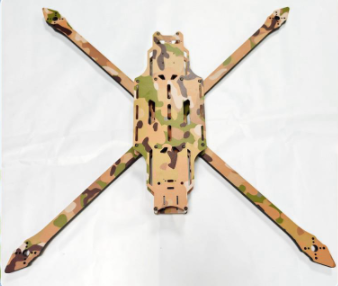
In high-performance drone design, the use of advanced carbon fiber sheets combined with high-tensile hardware creates a highly resilient system. JJY specializes in manufacturing precision-engineered FPV and industrial drone frames tailored across a comprehensive dimension spectrum-including the legendary Mark4 Series (V2-V4) available in 5-17 inch sizes for freestyle, long-range, and heavy-lift applications; the XL10 Series (V6-V7) optimized for 10-inch propellers; the FX Series (FX7, FX10) high-agility 7 and 10-inch frames; and the X Series (X13-X18) extra-large format frames built for heavy payloads and specialized industrial inspection missions. For example, a robust structural frame can be assembled by pairing CNC-routed carbon fiber plates with specialized components like racing drone frame hardware. This hardware selection includes anodized 7075 aluminum screws, grade 12.9 alloy steel hex socket screws, titanium fastening elements, and multi-colored aluminum round or knurled standoffs. To prevent delamination and ensure secure structural joints under heavy vibrations, engineering teams integrate stainless steel press nuts (sunk nuts) in M2, M2.5, and M3 sizes directly into the carbon fiber panels. This precise integration of high-strength fasteners and rigid carbon fiber sheets prevents frame deformation, isolates high-frequency motor vibrations, and protects internal avionics during complex flights.
5. Strategic Scaling and Future Horizons in Global Supply Chains
As global regulatory frameworks open more low-altitude airspace for commercial use, the demand for composite materials is projected to grow exponentially. This commercial shift requires suppliers to possess not only advanced technical capabilities but also scalable manufacturing infrastructure. To reliably serve international distribution channels, aerospace firms, and industrial enterprises, suppliers must maintain large-scale production capacities and strict quality control systems.
The ability to provide comprehensive, one-stop functional services-ranging from raw carbon fiber prepreg production to complex multi-axis CNC cutting, (supported by seven specialized high-speed CNC cutting systems operating with micron-level accuracy, hole drilling down to a minimum diameter of 1.5mm, 45 degrees /90 degrees countersinking, and smooth edge finishing), chamfering, and custom painting-allows leading manufacturers to integrate smoothly into global aerospace supply chains. By supporting both large-scale production and custom, small-batch OEM/ODM projects, top composite manufacturers help modern enterprises accelerate their product development cycles. This reliable supply chain support ensures that the next generation of low-altitude aircraft can transition efficiently from initial prototype testing to full commercial deployment.
Corporate Overview and Contact Information
Shenzhen Jinjiuyi Electronic & Technology Co., Ltd. (JINJIUYI) is a specialized manufacturer and supplier of carbon fiber materials, FPV drone frames, and advanced composite solutions. The company operates high-precision manufacturing facilities equipped with multiple CNC carbon fiber cutting systems, enabling efficient production and tight tolerances for global clients. JINJIUYI provides high-performance products tailored for aerospace, FPV drone building, sports equipment, industrial automation, and lightweight structural engineering. By utilizing premium T700 and T800 raw carbon fibers, JINJIUYI ensures that its carbon fiber plates, tubes, and molded components meet international standards for durability and strength. Focused on technical innovation, comprehensive OEM/ODM customization, and reliable technical support, JINJIUYI remains a trusted long-term partner for distributors, industrial manufacturers, and engineering teams worldwide.
For technical data sheets, volume inquiries, or custom product design consultations, please visit the official corporate portal.
Official Website: https://www.jinjiuyi.net/
JJY
JJY
Legal Disclaimer:
EIN Presswire provides this news content “as is” without warranty of any kind. We do not accept any responsibility or liability
for the accuracy, content, images, videos, licenses, completeness, legality, or reliability of the information contained in this
article. If you have any complaints or copyright issues related to this article, kindly contact the author above.

Media gallery